By late summer in South Austin, your lawn and sprinkler system have been through a lot.
Months of high temperatures, intense sun, dry stretches, mowing, foot traffic, and heavy irrigation can expose problems that were easy to overlook earlier in the year. At the same time, fall is approaching, and your lawn’s watering needs are about to change.
That makes the end of summer one of the best times to take a closer look at your irrigation system. A few adjustments now can help your lawn transition into fall while reducing unnecessary water use and catching small sprinkler problems before they become bigger repairs.
Adjust Watering as Temperatures Cool
A common mistake homeowners make is setting an irrigation controller in the summer and leaving it unchanged for months.
During the hottest part of an Austin summer, your lawn loses moisture quickly. As temperatures begin to fall and days become shorter, that changes. Grass grows more slowly, evaporation decreases, and your landscape generally requires less supplemental water.
Austin Water specifically recommends reducing irrigation during the cooler spring and fall months rather than continuing to water at peak-summer levels.
That means the watering schedule that worked in July may be excessive by October.
Instead of simply turning your sprinkler system off, gradually adjust it based on weather, rainfall, soil conditions, and how your lawn is responding.
Your irrigation controller should work with the season, not against it.
Inspect Each Zone for Summer Damage
Late summer is also a good time to perform a visual inspection of your sprinkler system.
Many irrigation problems become obvious after several months of frequent use.
Turn the system on and walk through each zone. Look for:
- Sprinkler heads that don’t pop up completely
- Heads spraying sidewalks, fences, driveways, or the street
- Weak or uneven spray patterns
- Water pooling around sprinkler heads
- Areas receiving noticeably more or less water than the rest of the lawn
- Broken or damaged sprinkler heads
- Drip irrigation lines that have become disconnected
- Zones that aren’t turning on
- Sprinklers blocked by growing shrubs or landscaping
- Water continuing to flow after a zone shuts off
A sprinkler system can appear to be working while still wasting a surprising amount of water.
A small underground leak might never create an obvious geyser, but it can still waste water every time that zone operates.
Catching those problems before fall allows you to start the next season with a more efficient system.
Brown Grass Doesn’t Always Mean “Water More”
When homeowners see brown or stressed areas in the lawn, the first instinct is usually to increase the sprinkler runtime.
That isn’t always the right answer.
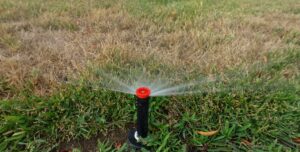
If one part of the lawn is brown while another looks healthy, the problem may be sprinkler coverage rather than the total amount of water you’re applying.
Possible causes include:
- A clogged sprinkler nozzle
- A damaged sprinkler head
- Low water pressure
- Poor sprinkler spacing
- A head that has shifted out of alignment
- Different sprinkler types operating within the same zone
- Soil compaction
- Excessive runoff
Adding more watering time can actually make the problem worse. The healthy parts of the yard receive even more water while the dry area remains dry.
Before increasing your irrigation schedule, make sure the system is distributing water evenly.
Use Lawn Patterns to Spot Irrigation Problems [H3]
Look for areas that struggled throughout the summer. Patterns in the lawn can tell you quite a bit.
A perfectly circular dry area may indicate a sprinkler coverage problem. Grass along a driveway may dry faster because of reflected heat. A constantly wet patch could indicate drainage or irrigation problems. Areas underneath trees may have completely different watering requirements from grass exposed to full sun.
Understanding those differences allows you to adjust the irrigation system rather than treating the entire property exactly the same.
Reduce Runoff With Cycle-and-Soak
If water is flowing down the sidewalk or driveway during your sprinkler cycle, your lawn probably isn’t benefiting from that extra runtime.
Central Texas soils can sometimes absorb water more slowly than an irrigation system applies it. When that happens, water begins running off before it has an opportunity to soak deeply into the root zone.
One solution is called cycle and soak irrigation.
Instead of watering a zone continuously for a longer period, the controller divides the watering into shorter cycles with breaks in between.
For example, instead of running a sprinkler zone continuously for 15 minutes, the system might run for five minutes, pause to allow the water to soak into the soil, and then repeat the process.
Austin Water recommends this approach as a way to reduce runoff and improve how effectively irrigation reaches plant roots.
It’s a simple controller adjustment that can make a noticeable difference.
Check Your Water Bill and Meter for Hidden Leaks
The end of summer is also a good time to look back at your recent water usage.
If your water bill increased significantly without an obvious reason, your irrigation system is one of the first places worth investigating.
Underground irrigation leaks aren’t always visible from the surface. Depending on where the leak occurs, you might notice:
- An unusually wet area in the lawn
- Mushy soil around a sprinkler
- Water bubbling from the ground
- Reduced pressure in a sprinkler zone
- One zone performing differently from the others
- Water usage increasing despite no change in your schedule
If you suspect a hidden leak, turn off all indoor and outdoor water use, including the sprinkler system, and check your water meter. Take a reading, wait 30 minutes without using any water, and check it again. If the meter shows continued use, first check toilets, faucets, appliances, and other obvious sources. If none are using water, an irrigation or other underground leak may be the cause.
Austin Water customers with a My ATX Water smart meter can also review recent usage and leak alerts through the customer portal.
Fall Is a Good Time to Make Sprinkler Repairs
Once cooler weather arrives, warm-season grasses throughout Central Texas begin slowing down and eventually entering dormancy. Irrigation needs decrease significantly compared with summer.
That gives homeowners an opportunity to repair or improve the system without waiting until the next stretch of extreme heat.
Common fall irrigation projects include:
- Replacing broken or buried sprinkler heads
- Correcting uneven coverage and spray patterns
- Repairing leaking valves or drip lines
- Replacing damaged nozzles
- Reprogramming controllers and checking sensors
- Correcting pressure or other system problems
Then, when temperatures start climbing again next year, the system is ready.
Pay Attention to Fall Rainfall
Austin weather doesn’t always follow a predictable schedule.
Your sprinkler system shouldn’t automatically run simply because Tuesday, Wednesday, or Thursday happens to be its programmed watering day.
Austin Water advises homeowners to account for rainfall when determining how much supplemental irrigation their landscapes actually need.
If your sprinkler controller supports a rain sensor, weather-based adjustment, or smart irrigation features, this is also a good time to make sure those features are operating correctly. If your controller doesn’t already have one, many modern irrigation controllers can be equipped with compatible rain or freeze sensors to help prevent unnecessary watering during rainfall or freezing conditions.
Verify Current Austin Watering Rules
Watering schedules and restrictions can change depending on local water conditions, your address, and the type of irrigation being used.
Before changing your controller, verify the current watering rules for your property.
Austin Water currently limits residential automatic irrigation systems to designated watering days and hours, so simply adding additional watering days isn’t necessarily an option.
A properly designed and functioning sprinkler system should help you get more benefit from the water you’re already using. Because of the restrictions, your sprinkler system needs to be that much more efficient when it does run.
Get Your Sprinkler System Ready for Fall
A healthier fall lawn can start with making sure every gallon of water is going where it’s supposed to go.
South Austin Irrigation can inspect your sprinkler system, identify leaks and coverage problems, repair damaged components, and help make sure your system is properly configured for your landscape. Contact us online or give us a call at (512) 534-7449.