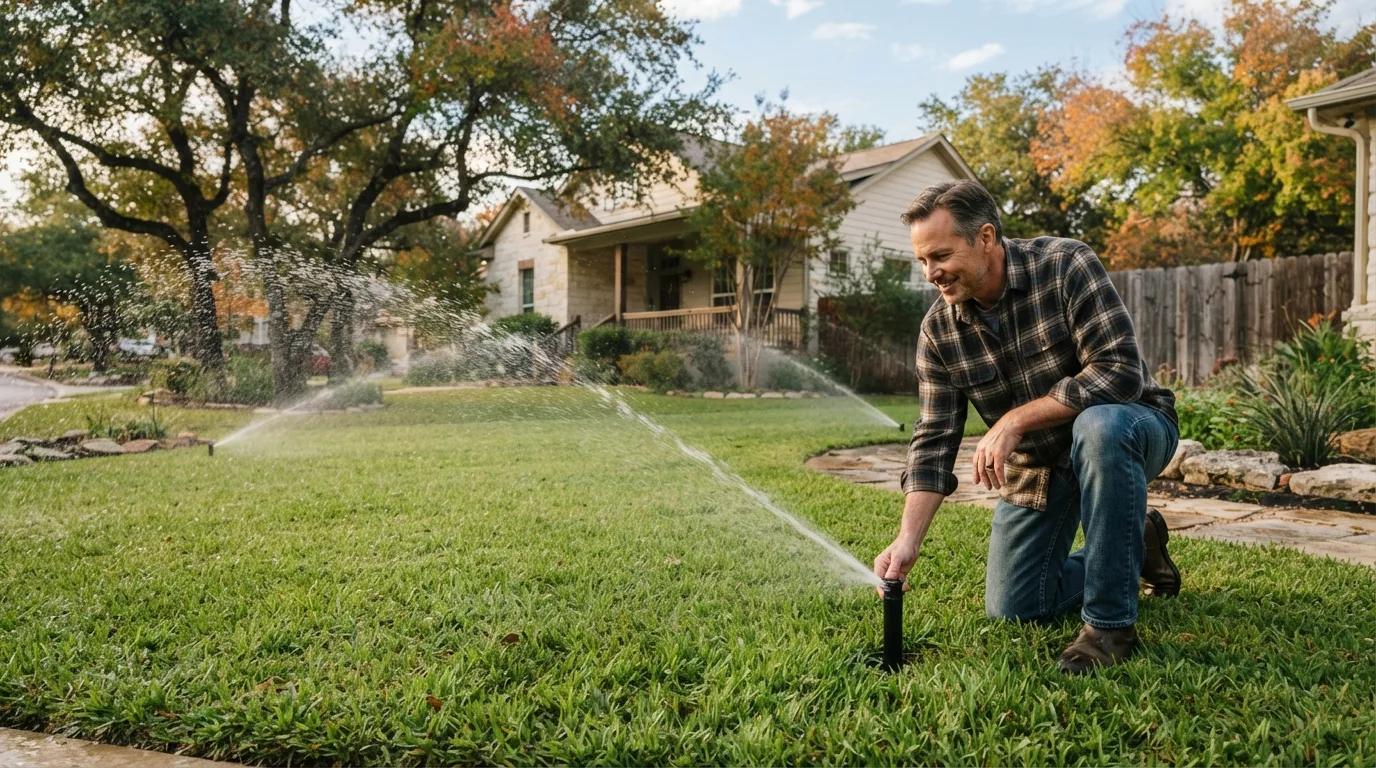
As summer heat starts to ease in Austin, your lawn usually doesn't need the same amount of water it needed in July or August.
One of the most common fall irrigation mistakes is leaving the sprinkler system on the same schedule all season long. Cooler temperatures, shorter days, and slower plant growth can all reduce how much water your landscape needs.
So how often should you run your sprinklers during the fall?
The answer depends on your lawn, soil, recent rainfall, and the type of irrigation system you have, but fall is generally the time to begin gradually reducing your watering schedule.
Why Your Lawn Needs Less Water in the Fall
During the hottest part of summer, water evaporates quickly and lawns can dry out fast. Once temperatures begin dropping, evaporation slows down and soil tends to stay moist longer.
Grass growth also starts to slow as the season changes.
That means watering your lawn on a midsummer schedule can easily lead to overwatering.
Too much water can create problems such as:
- Soggy soil
- Fungus and lawn disease
- Excessive runoff
- Higher water bills
- Weak or shallow root growth
- Water pooling around sprinkler heads or low areas
Reducing irrigation as conditions change helps keep your lawn healthy while avoiding unnecessary water use.
Pay Attention to Your Lawn Instead of the Calendar
There isn't one watering schedule that works for every Austin property.
A lawn with full sun, sandy soil, and little shade will dry out much faster than a heavily shaded yard with dense soil.
Rather than relying only on the controller schedule, watch your lawn for signs that it actually needs water.
Grass that needs water may begin to look dull, slightly gray or blue-green, or may not spring back quickly after being walked on.
On the other hand, constantly soft or muddy soil can be a sign that you're watering too much.
Let Rainfall Do Some of the Work
Fall weather in Central Texas can change quickly.
If Austin receives a good rain, your sprinkler system may not need to run again for several days.
This is where rain sensors and smart irrigation controllers can be especially helpful. They can prevent unnecessary watering after rainfall and help adjust irrigation based on changing weather conditions.
If your sprinkler system runs immediately after a rainstorm, it may be worth checking your controller settings or rain sensor.
Gradually Reduce Your Sprinkler Run Times
You usually don't need to make a dramatic change to your irrigation schedule all at once.
Instead, fall is a good time to gradually reduce either:
- How often each zone runs
- How long each zone runs
The right adjustment depends on your landscape.
Some areas may need very little supplemental watering while others, such as sunny turf areas or recently planted landscaping, may still need more attention.
Drip irrigation zones should also be reviewed separately from lawn sprinkler zones because trees, shrubs, and planting beds often have different watering needs.
Watch for Runoff
If water begins running down the driveway, sidewalk, or street before your sprinkler cycle finishes, your soil may not be absorbing water quickly enough.
Long watering cycles don't always mean deeper watering.
In some situations, shorter watering periods with breaks between cycles can allow water to soak into the soil more effectively.
This can be particularly useful in areas where compacted or clay-heavy soil absorbs water slowly.
Make Sure Your Sprinklers Are Covering the Lawn Evenly
Reducing your fall watering schedule can sometimes reveal problems that were less obvious during the summer.
For example, one part of your lawn may start drying out faster than the rest.
That doesn't always mean the entire yard needs more water.
The problem could be:
- A clogged sprinkler nozzle
- A damaged sprinkler head
- Low water pressure
- A sprinkler that is out of adjustment
- Landscaping blocking the spray
- Poor coverage between sprinkler heads
Increasing the watering time for the entire zone can waste water without fixing the actual problem.
Don't Forget Trees and Landscaping
Your grass isn't the only part of your landscape that needs attention.
Trees, shrubs, flowers, and other plants can have very different watering needs than turf.
A sprinkler schedule that works well for your lawn may provide too much or too little water for planting beds.
Drip irrigation can often provide more targeted watering in these areas, but drip lines should still be checked occasionally for leaks, clogged emitters, or damaged tubing.
Fall Is a Good Time for an Irrigation Checkup
When your landscape needs less water, it's a good opportunity to make sure your sprinkler system is operating efficiently.
Run each zone and look for obvious problems such as broken heads, leaks, overspray, poor coverage, or water pooling around valves.
Catching these problems in the fall can help reduce water waste and keep the system working properly as the seasons change.
Need Help Adjusting Your Austin Sprinkler System?
Your irrigation system shouldn't stay on the same schedule year-round.
As temperatures cool, making a few simple adjustments can help protect your lawn, conserve water, and reduce unnecessary irrigation.
If you're noticing dry spots, excessive runoff, broken sprinkler heads, uneven coverage, or you're simply unsure whether your system is watering efficiently, South Austin Irrigation can help.
Our team can inspect your sprinkler system, identify irrigation problems, and make the repairs or adjustments needed to keep your Austin landscape properly watered throughout the fall.\ \ Call South Austin Irrigation at 512-534-7449 or reach out to us online.