Austin doesn’t freeze often, but when it does, it usually happens fast. One night in the low 20s is all it takes to crack a backflow preventer or split a fitting that’s been holding water. The tricky part is that most freeze damage stays hidden until the next time your system runs.
If you already took steps to protect your irrigation system this winter, great. This guide is for the morning after. It walks you through how to thaw things out safely, what to check before you turn the water back on, and which signs mean it’s time to call a pro.
Step One: Don't Run Your Sprinklers Yet
It’s tempting to run a quick cycle to see if everything still works. Hold off until temperatures are back above freezing and the sun has had a few hours to warm things up.
Here’s why. Ice can still be sitting inside the backflow preventer, valves, or shallow lines. Sending pressurized water into a partly frozen system can turn a small crack into a burst pipe. Running water onto frozen ground can also leave ice on sidewalks and driveways.
While you wait:
Leave Your Controller Off or in Rain Mode
This keeps a scheduled cycle from starting on its own.
Let Parts Thaw Naturally
If you need to speed things up, Austin Water recommends gentle heat only, like a hair dryer, heating pad, or warm towels. Never use a torch or open flame on PVC or a backflow preventer.
Find Your Shutoff Valve
Know where your irrigation shutoff is (often near the backflow) and where your main water shutoff is in the meter box, in case you spot a leak once things thaw.
Your Post-Freeze Sprinkler Damage Checklist
Once everything has thawed, walk through these checks in order. Most homeowners can do this in about 20 minutes.
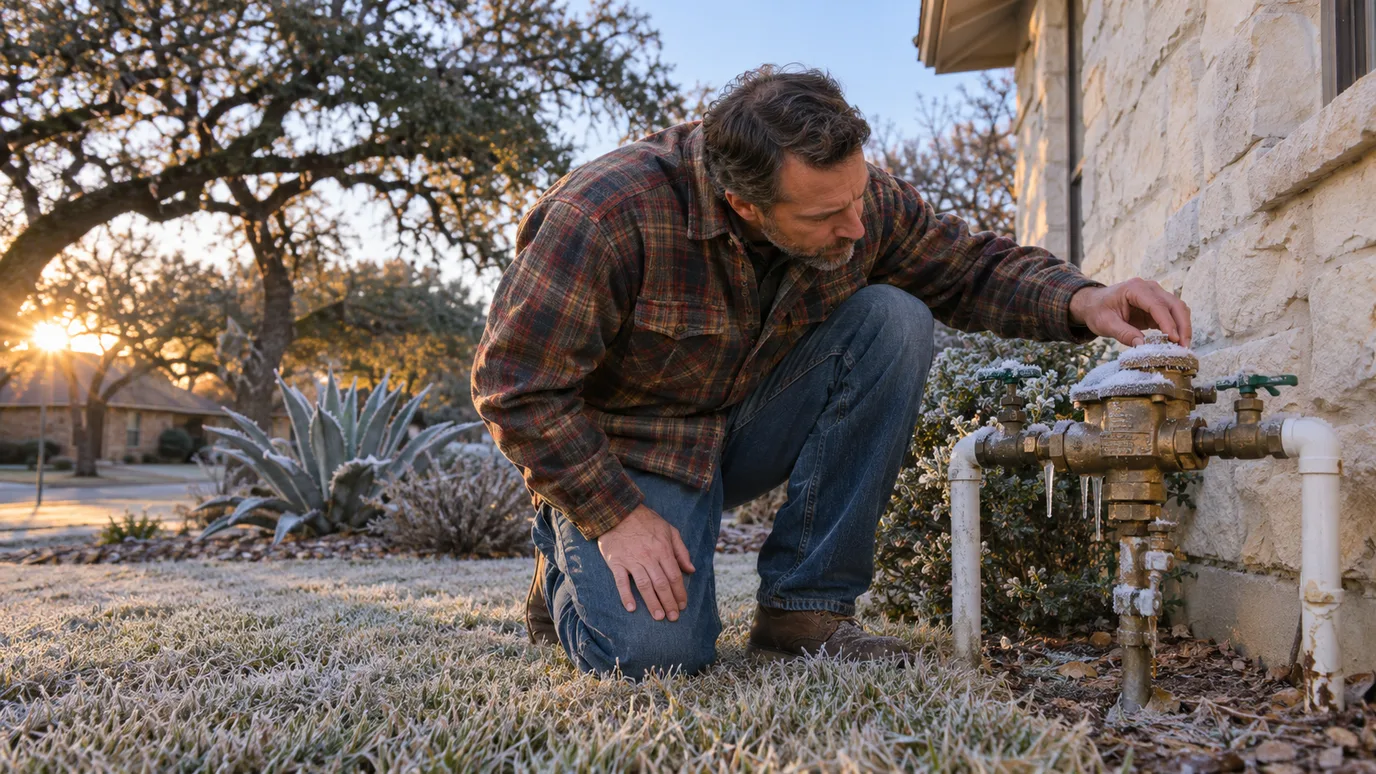
- Look over the backflow preventer. This is the above-ground brass assembly near your house, and it’s the part most likely to break in a freeze. Check for cracks in the body, a bulging or popped test cock, or water dripping from the bottom. Even a hairline crack means it needs attention.
- Check exposed pipe and fittings. Look at any pipe above ground or near the backflow for splits, especially at elbows and joints. Pipe on the north side of the house tends to stay frozen longest.
- Open your valve boxes. Lift the lids and look for standing water, ice, or cracked valve bodies. A box full of water after a dry stretch points to a leak.
- Turn the water back on slowly. Open the irrigation shutoff a little at a time. If you hear hissing or see water spraying, shut it off right away.
- Run each zone for 1 to 2 minutes. Start a manual cycle from your controller and walk the yard zone by zone. Watch for heads that don’t pop up, geysers, bubbling soil, or weak spray.
- Look for wet spots afterward. About an hour after testing, walk the yard again. Soggy areas or puddles between heads often mean an underground line cracked.
- Check your controller. Make sure it powered back on, kept the right date and time, and still has your programs. Power outages during winter storms can wipe settings.
If one zone won’t come on at all after a freeze, the valve or its wiring may be the problem. Our guide on why one sprinkler zone isn’t working covers the most common causes.
Backflow Cracked or Spraying Water? Do This Right Away
A cracked backflow preventer can push out a lot of water fast. If yours is leaking or spraying:
- Shut off the irrigation supply. Most Austin homes have a shutoff valve on the line feeding the backflow. Turn it clockwise until it stops.
- If you can’t find it, use the main shutoff. Austin Water says to use the property owner’s valve in the meter box first. If that one is missing or damaged, you can use the City’s valve, which may need a water meter key from the hardware store.
- Don’t try to glue or tape it. A frozen backflow usually needs new internal parts or a full replacement. Temporary patches tend to fail under pressure.
- Call for a repair. Your sprinklers can stay off for a few days in winter without hurting a dormant lawn.
In Austin, a backflow assembly that gets repaired or replaced must be tested by a licensed backflow tester, and the results are reported to Austin Water. South Austin Irrigation handles both the backflow installation and the backflow testing, so it’s one visit instead of two.
Freeze Damage That Shows Up Weeks Later
Not every freeze problem is obvious the next day. Small cracks underground can leak slowly for weeks before anyone notices. Keep an eye out for these signs through the rest of winter and into spring:
- A higher water bill with no change in your watering schedule
- Soggy or sunken spots in the lawn, especially along a straight line
- Low pressure in one zone or heads that barely pop up
- A zone that keeps running after the controller shuts it off, which can point to a cracked valve diaphragm
- Dry patches in spring where a damaged line isn’t delivering water
These are the same kinds of hidden sprinkler problems worth fixing before spring. Catching them in winter, when your system is barely running, is far cheaper than finding them in July.
When to Call South Austin Irrigation
Call a professional if you notice any of the following after a freeze:
- Visible cracks, bulges, or leaks on the backflow preventer
- Water spraying or bubbling up when you turn the system back on
- A zone that won’t turn on or won’t shut off
- Standing water in valve boxes or wet spots you can’t explain
- A controller that won’t power on or keeps losing its settings
South Austin Irrigation has been repairing sprinkler systems across Austin, Lakeway, Spicewood, Horseshoe Bay, Dripping Springs, and Wimberley for over 15 years. We can inspect your system, repair or replace freeze-damaged parts, and complete the required backflow test in the same trip.
Freeze Hit Your Sprinklers?
We’ll inspect the system, fix the freeze damage, and handle the backflow test in one trip.
Frequently Asked Questions
How cold does it have to get to damage sprinklers in Austin?
Damage becomes likely when temperatures stay below freezing for several hours, especially in the low 20s or colder. Above-ground parts like the backflow preventer freeze first because they have no soil around them for insulation.
Can I turn my sprinklers back on the day after a freeze?
Wait until temperatures are above freezing and parts have fully thawed, usually by midday. Then turn the water on slowly and test each zone for a minute or two before going back to your normal schedule.
Is a cracked backflow preventer covered by homeowners insurance?
It depends on your policy. Some cover sudden freeze damage, but many exclude outdoor irrigation parts. Check with your insurance provider, and take photos of the damage before it’s repaired.
Do I need a new backflow test after a freeze repair?
Yes. In Austin, a backflow assembly that’s repaired or replaced needs to be tested by a licensed tester, with results reported to Austin Water.
How do I prevent this next time?
See our guide to winterizing your sprinkler system in Austin for simple steps to take before the next freeze warning.